
How to Make a Backyard Cement Floor Using a Concrete Mixer (DIY Guide 2026)
Table of Contents

Introduction
Building a cement floor in your backyard is a popular DIY project, especially for improving areas like washing zones, storage spaces, side pathways, or small relaxation corners. When done properly, a cement floor not only looks neater but is also easier to maintain and durable for daily use. 🏠
However, manual mixing can be tiring and often results in inconsistent mixtures. That’s why many people now prefer using a concrete mixer for faster, more consistent, and smoother work. In this guide, we’ll walk through the basic steps to create a backyard cement floor using a concrete mixer in a simple and practical way.
Why Do People Build Cement Floors in the Backyard? 🔍
Backyard areas often become muddy, dirty, or difficult to use if left as bare soil or uneven surfaces. A cement floor makes the space far more functional.
Common reasons include:
Easier cleaning and maintenance
Reduces muddy areas during rain
Suitable for washing machines, racks, or storage
Creates a neater and more organized look
Can be used as a walkway or small workspace
For terrace homes or limited backyard spaces, a cement floor is one of the most practical and worthwhile upgrades. ✅
Materials and Tools Required 🧱
Before starting, ensure all basic materials and tools are prepared for a smoother process.
You’ll typically need:
Cement
Sand
Aggregate (if required)
Water
Concrete mixer
Shovel or hoe
Wheelbarrow (if needed)
Timber for formwork
Leveling tools
Finishing tools (e.g., trowel)
Measuring tape and marking string
For larger areas, using a concrete mixer significantly speeds up the process and reduces fatigue. 👍

Step-by-Step Guide to Making a Backyard Cement Floor Using a Concrete Mixer 🛠️
1. Clear and mark the area
Start by clearing the backyard area—remove grass, stones, and debris. Mark the boundaries to define your working area.
Also consider water flow. A good cement floor should have a slight slope to prevent water pooling.
2. Level the ground
After marking, level the soil surface. Fix any uneven areas before proceeding.
This step is crucial because uneven ground leads to inconsistent thickness and poor finishing.
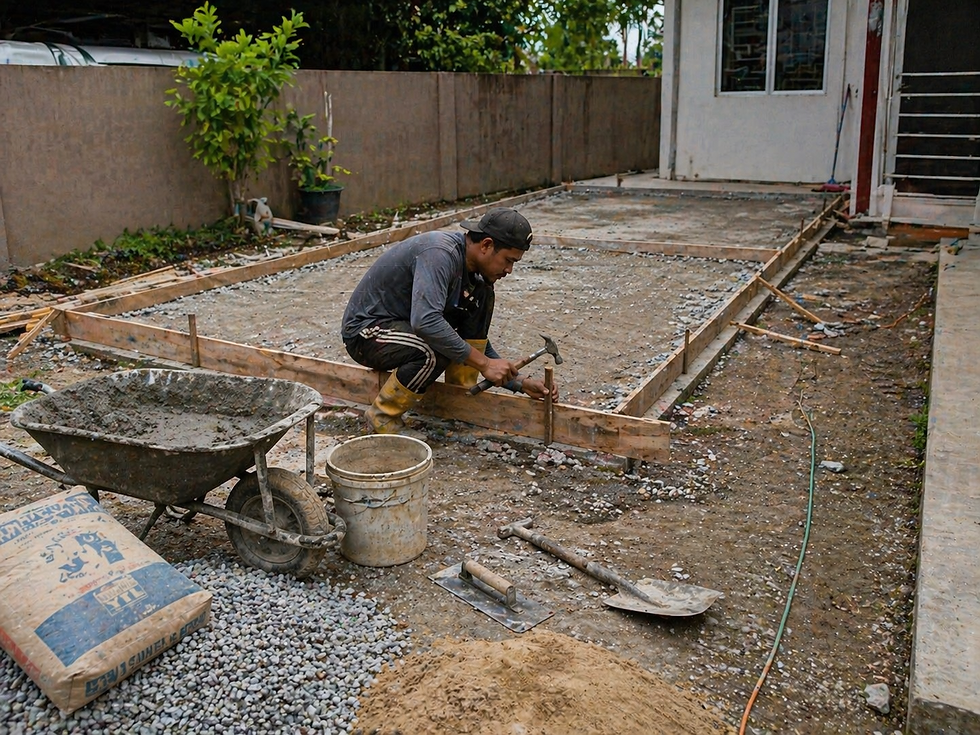
3. Install formwork
Use wooden boards to create formwork along the edges. This defines the shape and thickness of your cement floor.
It also keeps the concrete in place during pouring and leveling.
4. Mix concrete using a concrete mixer
Add materials into the mixer using consistent ratios. The mix should not be too wet or too dry.
Key tips when using a mixer:
Add materials in the correct sequence
Avoid pouring too much water at once
Ensure the mix is uniform before pouring
Use consistent measurements for every batch
Using a mixer makes the process faster and ensures uniform results compared to manual mixing. 🔄
5. Pour and level the mixture
Pour the concrete gradually into the prepared area. Spread and level it evenly to maintain consistent thickness.
Work continuously to avoid uneven setting between sections.
6. Finish the surface
Use a trowel or finishing tool to smooth the surface. You can choose a fine or slightly rough finish depending on usage.
7. Allow proper curing
Do not use the area immediately. The cement floor needs time to set and cure properly.
Proper curing results in a stronger and more durable surface with reduced cracking risk. 🌤️
Tips for a Neat and Durable Cement Floor ✨
Even though it seems simple, small details greatly affect the final result.
Helpful tips:
Ensure the base is properly leveled
Avoid overly wet mixtures
Create a slight slope for drainage
Use clean and well-fitted formwork
Level each section quickly after pouring
Avoid using the surface too soon
With careful execution, even DIY results can look clean and professional. 📏
Common Mistakes When DIY Cement Flooring ⚠️
Many DIY projects fail due to common avoidable mistakes.
Common issues:
Poor ground leveling
Mixture too watery
Inconsistent batch ratios
No slope for drainage
Slow work causing uneven setting
Using the surface before proper curing
These mistakes can lead to cracks, uneven surfaces, and faster wear. 👀
Our Small Concrete Mixer Rental Price 💰
For DIY projects like backyard flooring, a small mixer is usually sufficient and practical.
Rental Pricing Table
Machine Type | Capacity | Type | Weight | Rental Price | New Price |
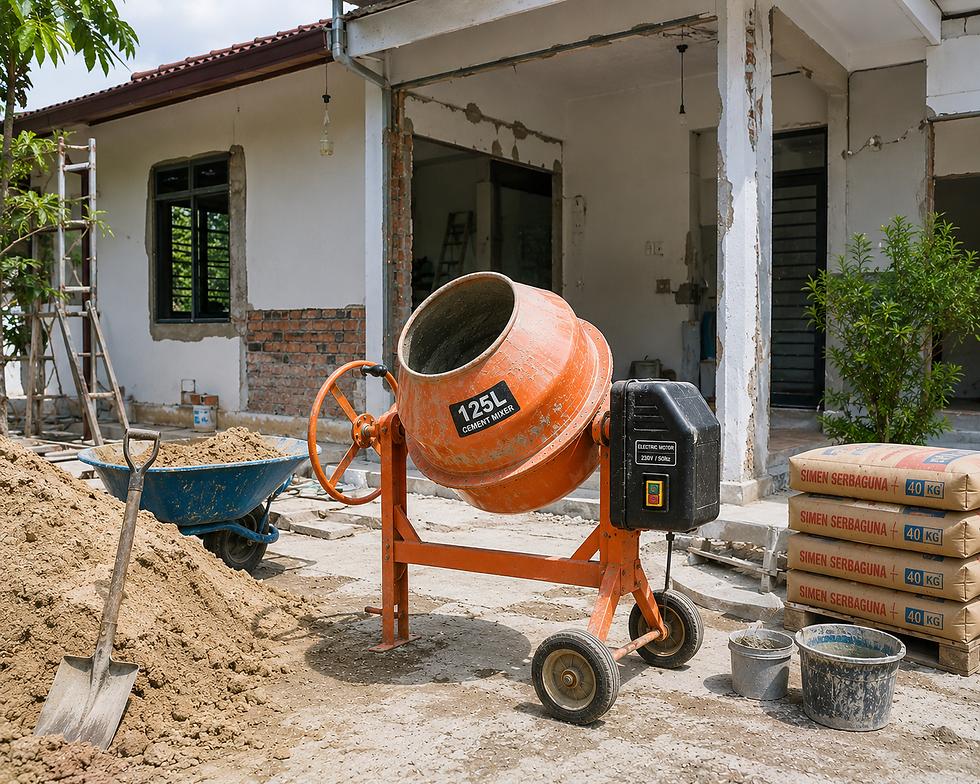
Small Concrete Mixer | 125L | Electric | 52kg | RM250 / month | RM2,400 |
Why this machine is popular:
Ideal for home DIY projects
Easy to handle
Compact and practical size
Much more cost-effective than buying
For many users, renting at RM250/month is far more affordable than purchasing a new unit. 🔥

Did You Know? 🤔
In many DIY home projects, the biggest issue isn’t materials—it’s inconsistent mixing and slow workflow.
That’s why using a concrete mixer helps maintain consistency, reduce fatigue, and speed up the process.
For small backyard flooring projects, a 125L mixer is usually more than sufficient without needing a larger, heavier machine.
Conclusion 📌
If you want to build a backyard cement floor yourself, success depends on proper site preparation, consistent mixing, and smooth finishing.
When these steps are done correctly, the result is a cleaner, more practical, and long-lasting surface.
Using a concrete mixer makes the job significantly easier—especially if you want faster results without the inconsistency of manual mixing. For DIY home projects, a small mixer is often the most cost-effective option.
Concrete Mixer & Cement Floor FAQs ❓
1. Do I need a concrete mixer for backyard flooring?
Not required, but highly recommended for faster and more consistent mixing.
2. What is a 125L mixer suitable for?
Small DIY projects, light construction, and limited areas like backyard flooring.
3. How much does it cost to rent a small mixer?
Our rental price is RM250/month for a 125L electric mixer.
4. Why rent instead of buying?
It’s more cost-effective for short-term projects and avoids large upfront costs.
5. Should backyard cement floors have a slope?
Yes, a slight slope is recommended to ensure proper water drainage.
Book a Concrete Mixer at Better Value 📲
Want to complete your cement flooring faster and more efficiently?
f you’re looking for concrete mixer rental in Malaysia, we offer a 125L small mixer ideal for home DIY projects. Our pricing is more affordable and practical compared to buying or renting from higher-cost suppliers. 💬
📲 Contact us now to check availability, request a quotation, or click your WhatsApp link here! The earlier you plan, the easier it is to secure the right machine and complete your project smoothly. ✨

Comments