
Concrete Mixer vs Manual Mixing – Which Is Faster & More Cost-Effective? (2026)
Table of Contents

Introduction
When working on concrete projects, many people ask the same question: is it better to use a concrete mixer or mix cement manually? Both methods work—but in terms of time, effort, and results, there are clear differences. 🧱
For small tasks, manual mixing may still be manageable. But when a project requires larger volumes and consistent mixing, a concrete mixer is usually far more practical.
In this article, we’ll compare both methods in a simple way so you can choose what best suits your project and budget.
What’s the Difference Between a Concrete Mixer and Manual Mixing? 🔍
Manual mixing is done using physical effort with tools like shovels, hoes, or mixing trays. All materials are combined by hand until the desired texture is achieved.
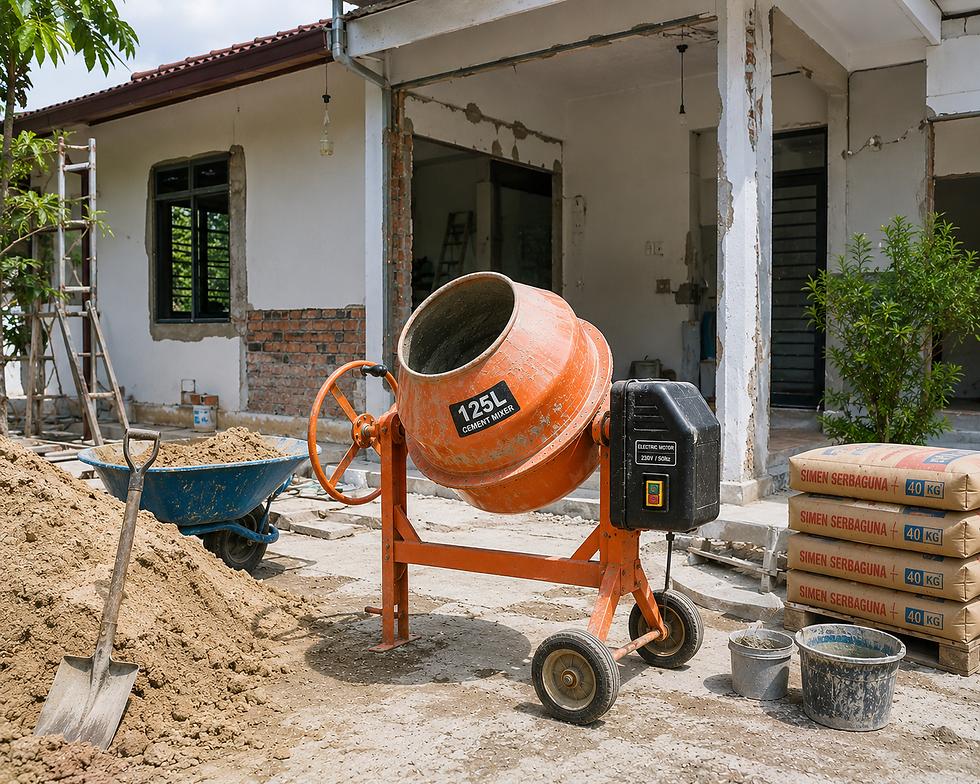
A concrete mixer, on the other hand, uses a machine to mix cement, sand, aggregate, and water quickly and evenly. This reduces physical effort and improves consistency across batches.
Key differences:
Speed of work
Physical effort required
Consistency of the mix
Volume of work completed
Suitability based on project scale
The best choice isn’t about old vs modern—it’s about what’s most practical for your project. ✅

Which Is Faster for Completing Work? ⏱️
When it comes to speed, a concrete mixer clearly has the advantage.
Concrete mixer is faster for repeated batches
Faster mixing process
Less downtime between batches
Fewer workers required
Smoother pouring and finishing workflow
Manual mixing is slower because every step depends on human effort. The more batches required, the more fatigue slows progress.
For small jobs, the difference may not be obvious. But for projects like flooring, slabs, or larger areas, the time difference becomes significant. 🔄
Which Is More Cost-Effective? 💰
Many assume manual mixing is always cheaper because there’s no machine rental—but the reality is more nuanced.

Manual mixing seems cheaper, but has hidden costs
Longer project duration
Higher labor effort
Increased risk of inconsistent mixes and material waste
Greater physical strain
Concrete mixer offers better value for larger work
Faster completion time
Less labor required
More consistent results
Lower risk of rework
For very small projects, manual mixing may still be fine. But for anything beyond that, renting a concrete mixer often makes more financial sense overall. 👍

Mixing Quality: Which Is More Consistent? 🛠️
Consistency is crucial in concrete work.
Concrete mixer ensures better consistency
More uniform texture
Easier control of material ratios
More reliable results
Smoother finishing
Manual mixing depends heavily on the person doing the work. If measurements vary or mixing is uneven, results can differ from batch to batch.
For projects requiring durability and clean finishing, consistency is critical. 👀
When Is Manual Mixing Still Suitable? 🪣
Despite its limitations, manual mixing still has its place.
Suitable for:
Very small tasks
Minor repairs or patching
Tight spaces where machines can’t fit
Situations with sufficient labor and time
Projects requiring only a few batches
For quick, low-volume work, manual mixing remains practical.

When Is a Concrete Mixer More Worth It? 🚜
In many cases, a concrete mixer is the better option from the start.
Ideal for:
Cement flooring projects
Jobs requiring multiple batches
Projects lasting several days or weeks
Situations where time and effort savings matter
Work requiring consistent mixing quality
Many people who start with manual mixing eventually switch to a mixer when the workload increases. 🔥
Did You Know? 🤔
On construction sites, time and consistency often cost more than expected. Slow or inconsistent mixing can disrupt the entire workflow.
That’s why concrete mixers are not just for convenience—they help maintain workflow efficiency and overall project quality.
For home projects, renovations, or small contractor jobs, renting a mixer is often the most practical middle ground—no need to buy, but you still get the benefits. 📌

Conclusion 📌
If you’re deciding between a concrete mixer and manual mixing, the answer depends on your project scale.
For very small and simple tasks, manual mixing may still work. But for projects requiring multiple batches, faster completion, and consistent results, a concrete mixer is usually the better choice.
Most importantly, don’t look at initial cost alone. Consider time, labor, quality, and efficiency. When everything is factored in, a concrete mixer often provides better overall value. 🎉
FAQs: Concrete Mixer vs Manual Mixing ❓
1. Is a concrete mixer really faster than manual mixing?
Yes, especially for projects requiring multiple batches.
2. When is manual mixing still suitable?
For small repairs, patching, or very low-volume work.
3. Is a concrete mixer more cost-effective?
For larger projects, yes—it saves time, labor, and reduces waste.
4. Is the mix quality better with a concrete mixer?
Generally yes, as it provides more consistent and uniform results.
5. Should I buy or rent a concrete mixer?
For most users, renting is more practical for short-term projects.
Book a Concrete Mixer at Better Value 📲
Want faster mixing without the fatigue of manual work?
If you’re looking for concrete mixer rental in Malaysia, choose a practical solution for home projects, renovations, or small-to-medium construction work. Using a mixer helps you complete tasks faster, achieve consistent mixes, and reduce physical strain. 💬
Why people choose concrete mixers:
Faster workflow
More consistent mixing
Less fatigue and time wasted
Ideal for multi-batch projects
📲 Contact us now to explore machine options, request a quotation, or click your WhatsApp link here! The earlier you plan, the easier it is to select the right equipment and complete your work smoothly. ✨

Comments