
Cement vs Concrete: What’s the Difference & Which to Use in Commercial Projects
Table of Contents

Introduction
Cement and Concrete Confusion
Many people use the terms "cement" and "concrete" interchangeably, but they are not the same. Understanding their differences is essential, especially in large-scale construction and commercial projects in Malaysia. In this guide, we explain the difference between cement and concrete, and which one suits your project best.
What is Cement?

Cement is a binding agent, usually made from limestone, clay, shells, and silica sand. When mixed with water, it forms a paste that hardens over time. Cement is a key ingredient in concrete and is available in various types, including:
Ordinary Portland Cement (OPC)
White Cement
Rapid Hardening Cement
Key Points:
Cement is not used on its own for structures.
It acts as a binder for aggregates like sand and gravel.
Comes in bags and requires careful storage from moisture.
Q: Is cement waterproof?
A: Cement alone is not waterproof, but additives can improve its water resistance.
What is Concrete?

Concrete is a composite material made from a mix of cement, water, and aggregates like sand and gravel. It is the most commonly used construction material worldwide, thanks to its strength and durability.
Key Points:
Concrete includes cement, but cement is only one component.
Often reinforced with steel rods for large-scale commercial use.
Suitable for structures, pavements, walls, flooring, and more.
Q: How long does concrete take to cure?
A: Typically 28 days for full strength, though initial hardening occurs within 24-48 hours.
Cement vs Concrete: Key Differences
Feature | Cement | Concrete |
Composition | Limestone, clay, shells | Cement + water + sand + gravel |
Function | Binding agent | Construction material |
Usage | Ingredient in concrete/mortar | Buildings, roads, pavements |
Strength & Durability | Brittle on its own | High strength and long-lasting |
Appearance | Fine powder | Solid structure |
Q: Can cement be used without concrete?
A: It can, in mortar or plastering, but not for load-bearing structures.
Which is Better for Commercial Projects?
For commercial construction in Malaysia, concrete is the superior choice due to its:

Load-bearing capacity
Weather resistance
Cost-effectiveness
Compatibility with reinforcements
Cement, on the other hand, is essential in producing concrete, but not suitable as a standalone material for structures.
Q: Why use reinforced concrete for commercial buildings?
A: It offers higher tensile strength and better structural integrity.
Common Applications in Malaysia’s Construction Industry
Commercial Floors: Concrete is used for durability and load capacity.
Foundations: High-grade concrete ensures building stability.
Pavements: Concrete offers a long-lasting surface for heavy traffic.
Precast Walls: Popular in factories and warehouses.
Q: Can I use concrete blocks for interior walls?
A: Yes, especially in industrial or minimalist design spaces.
Choosing the Right Cement Ratio for Concrete

The cement-sand-aggregate ratio greatly influences concrete quality. A common ratio is:
1:2:4 (1 part cement, 2 parts sand, 4 parts gravel)
For commercial use, consider:
Water-cement ratio (too much water weakens the mix)
Additives for workability or fast setting
Q: How many cement bags for 1m3 of concrete?
A: Approximately 7-8 bags (depending on mix strength and density).
FAQs: Cement vs Concrete in Commercial Use
Q1: What’s the difference between a cement truck and a concrete truck?
A: Cement trucks transport dry cement; concrete trucks mix and transport ready-to-use concrete.
Q2: Is concrete more expensive than cement?
A: Per kg, cement is cheaper, but concrete includes other components and labor.
Q3: Can epoxy be used over cement or concrete?
A: Yes, epoxy works as a strong coating over cured concrete.
Did You Know?
The Cement & Concrete Association of Malaysia (C&CA) promotes research and innovation in concrete technologies.
Ancient Romans used a form of concrete over 2,000 years ago, and some of their structures still stand today!
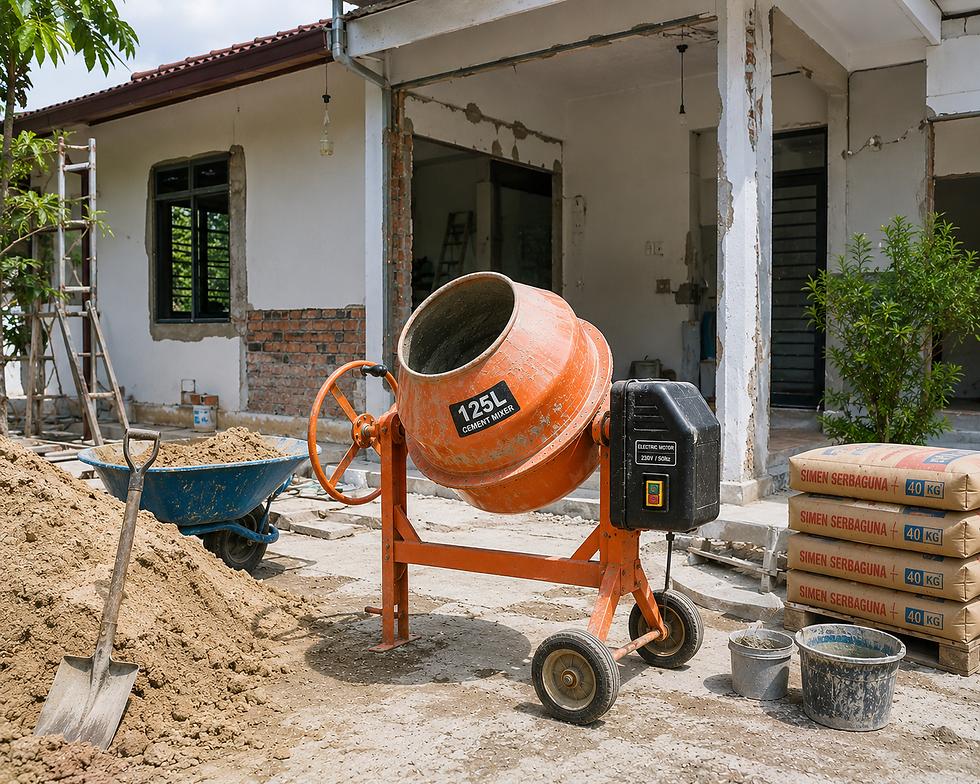
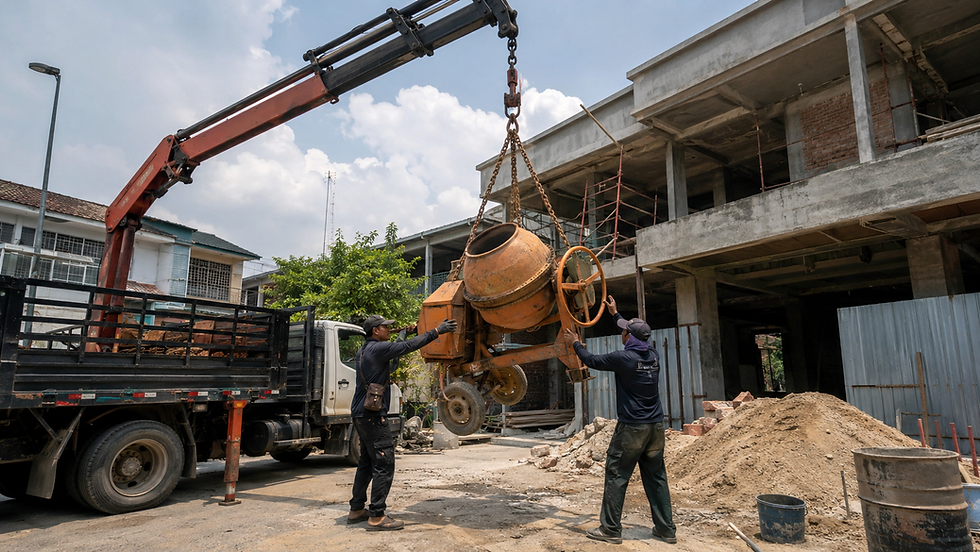
When working on commercial projects, getting the right concrete mix is key to long-term strength and stability. Our cement mixer machine rentals in Malaysia are ideal for:
Small to large-scale commercial projects
Accurate and consistent mixing
Time-saving and cost-efficient solutions
Get your concrete mix right from the start with our affordable and reliable cement mixer machines.

Comments